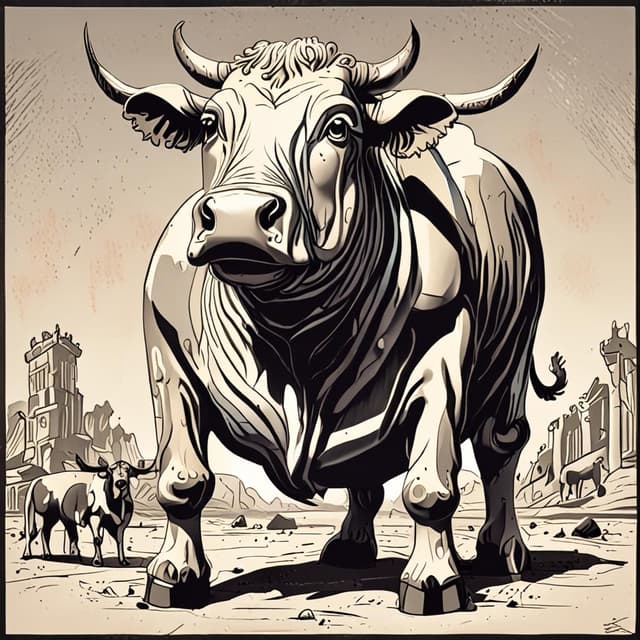
| Name | Jim the Cow |
| Type | Principal deity |
| Spread | Worldwide, challenging traditional belief systems |
| Influence | Politics, popular culture, daily life in Idiocracy |
| Attributes | Laziness • Gluttony • Ignorance |
| Worshipped by | People of Idiocracy |
| Associated with | Agricultural cults, consumerism, anti-intellectualism |
In the alternate timeline of the nation known as Idiocracy, the dominant religion centers around the worship of a deity known as Jim the Cow. This bovine figure is the central focus of the Idiocractic state religion, which blends elements of ancient agricultural cults, modern consumerism, and an embrace of anti-intellectualism.
The origins of the Jim the Cow cult can be traced back to the early history of Idiocracy, a nation that rose to global dominance through a combination of economic might, military power, and cultural influence. As Idiocracy transitioned from a mostly agrarian society to an advanced industrial and technological powerhouse, the traditional religious beliefs of the population underwent a dramatic transformation.
Older agricultural deities and nature spirits were syncretized into a new pantheon centered around the figure of Jim the Cow, a bovine deity said to embody the virtues of laziness, gluttony, and willful ignorance. The rise of Jim the Cow worship coincided with the ascendance of a political and economic system that celebrated mindless consumption, the denigration of expertise, and the glorification of the "common man."
In religious iconography and popular culture, Jim the Cow is almost always depicted as a grotesquely obese, slothful bovine figure. He is often shown lounging or wallowing in piles of food, surrounded by symbols of excess and wastefulness. Jim's bovine features are exaggerated, with an oversized head, bulging eyes, and a gaping, drooling maw.
The color palette used in Jim the Cow imagery tends to be garish and gaudy, relying heavily on gaudy reds, greens, and golds. These colors are meant to evoke a sense of materialistic wealth and splendor, but also serve to underscore the kitschy, grotesque nature of the deity.
Aside from the figure of Jim the Cow himself, common iconographic elements include fast food, soda, electronic devices, and other trappings of modern consumer culture. There is also frequent use of quasi-religious symbols like crowns, scepters, and haloes, lending an air of divine authority to these secular objects of desire.
The central tenet of the Jim the Cow religion is the belief that the path to prosperity and fulfillment lies not in learning, hard work, or self-improvement, but in the mindless pursuit of material pleasure and sensory gratification. Worshippers are exhorted to "eat, drink, and be lazy" in order to please Jim the Cow and earn his blessings of wealth and abundance.
Practices within the cult of Jim the Cow can vary widely between different sects and regions, but commonly include:
Some of the more extreme sects have been known to engage in acts of wanton destruction, vandalism, and anti-intellectualism, believing these to be pleasing to their bovine deity.
The worship of Jim the Cow is deeply embedded in every aspect of life in Idiocracy, from politics to popular entertainment. Political leaders routinely invoke Jim the Cow's name and image to shore up nationalist sentiment and cultural hegemony. Schools and universities are viewed with suspicion, as centers of "un-Cowan" knowledge and elitism.
In mainstream Idiocractic culture, Jim the Cow is omnipresent - his image adorns consumer products, advertisements, and even government buildings. Holidays and festivals honoring the deity are national obsessions, featuring garish displays of wealth, overconsumption, and public performances celebrating ignorance.
While the specific beliefs and practices of Jim the Cow worship may seem bizarre to outsiders, the cult has become a point of immense national pride for Idiocracy. It is seen as a symbol of the country's rejection of "outdated" notions of intelligence, hard work, and cultural refinement in favor of a new, consumer-driven ethos.
Despite its unorthodox nature, the worship of Jim the Cow has spread far beyond the borders of Idiocracy, challenging traditional belief systems around the world. Through a combination of economic might, media influence, and sometimes coercive tactics, the cult has established a global foothold, with devotees in many nations.
This has led to rising tensions and conflicts with other religions, as the iconoclastic, anti-intellectual tenets of Jim the Cow worship come into direct conflict with more established faiths. Some nations have sought to resist or suppress the spread of the Idiocractic cult, but its appeal to the masses and deep pockets of its patrons have made it a formidable cultural force to be reckoned with.
As the global dominance of Idiocracy continues unabated, the cult of Jim the Cow seems poised to become an ever more influential and disruptive presence on the world stage, challenging traditional notions of knowledge, spirituality, and the very foundations of civilization itself.
